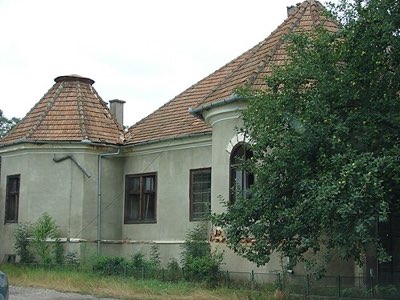
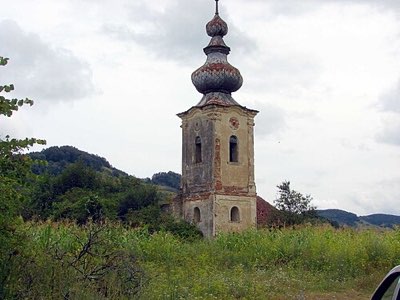
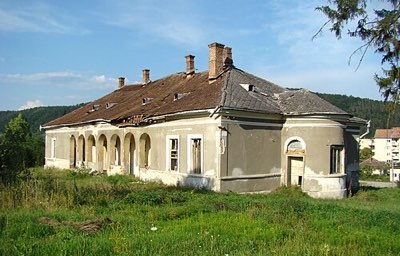
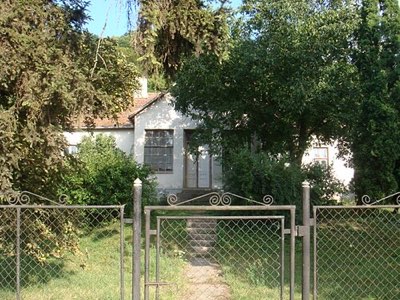
Wesselényi Castle, Jibou
Castelul Wesselényi · Wesselényi-kastély (Zsibó)
oraș Jibou, Sălaj · Str. Wesselenyi Miklos 18
1.3 ha of the former 10 ha park returned to the heir
usable area over two floors, as reported by the press (approx.)
Summary
The largest Baroque castle ensemble in Transylvania, built by the Wesselényi family in Jibou (Sălaj) between 1778 and 1810 and attributed to the architect Franz Wrabetz. Restituted to an heir in 2012, it was sold in 2021 amid a pre-emption dispute and is in a legally unclear situation.
Legal status
Restituted in 2012 to a Teleki descendant; 2021 sale challenged by Sălaj County Council for breach of pre-emption right; first-instance annulment 20 Dec 2022 ↗
History
The oldest part is the curia, rebuilt in 1702 by Baron István Wesselényi and Kata Bánffy; a riding hall followed in 1771 and a stable in 1775. Miklós Wesselényi began the palace in 1778, but works stalled when he was jailed after attacking a neighbour in 1781, and resumed in 1796 under Franz Wrabetz. The interiors were painted by Franz Neuhauser and Johann Martin Stock, and the complex was completed in 1810. After nationalisation the interiors were stripped and the building served as a school, a Pioneers' House and a children's palace, while the park became a botanical garden. The private heir (Teleki descendant) won restitution of the castle and 1.3 ha of the former 10 ha park in 2011-2012. Unable to afford renovation, the heir offered it through Artmark Historical Estate for about a decade at a falling price, and sold it in April 2021 to Micro Vision SRL, which resold it to the Hungarian state-linked Manevi Zrt. According to ActualDeCluj, in December 2022 the Sălaj Tribunal annulled the sale at first instance on a pre-emption claim by Sălaj County Council.
Transactions & prices
| Date | Type | Amount | |
|---|---|---|---|
| 2012 | Restitution | — | Final restitution ruling in spring 2012 to Teleki descendant (castle plus 1.3 ha) ↗ |
| 2015 | Asking price | €1,500,000 | Artmark Historical Estate starting price per Romanian Wikipedia; later reduced ↗ |
| 2021 | Asking price | €800,000 | Asking price reduced by Artmark to EUR 800,000 before the sale ↗ |
| 2021-04-20 | Sale | — | Sold by heir to Micro Vision Consult SRL (Cluj), price to the heir not published; resold at once to Manevi Zrt. ↗ |
| 2021 | Sale | €830,000 | Resale Micro Vision to Manevi Zrt. at EUR 830,000 plus EUR 78,448 notary costs (figures from the court ruling) ↗ |
| 2022-12-20 | Pre-emption notice | — | Sălaj Tribunal annulled the sale on Sălaj County Council's pre-emption claim (first instance) ↗ |
Listed components
- Castel — 1779-1810 (SJ-II-m-A-05075.01)
- Curie — 1702 (SJ-II-m-A-05075.03)
- Manej — 1779 (1771) (SJ-II-m-B-05075.04)
- Seră — 1779-1810 (SJ-II-m-B-05075.05)
- Grajd — 1779 (SJ-II-m-B-05075.06)
- Șură — 1810 (SJ-II-m-B-05075.07)
- Parc — 1779-1810 (SJ-II-s-A-05075.02)
Sources & links
Found a mistake, or know more about this building? Write to us at contact@conace.eu.